Something is wrong with your eye, and you are standing in the bathroom trying to decide whether this is a wait and see situation or an eye injury care situation. Most people have no idea where that line sits, because nobody ever taught them. You know to call a dentist for a tooth and a doctor for a fever, but an eye falls into a gap. This guide answers the question directly: when is an eye problem an emergency, and when can it safely wait.
Why Eye Symptoms Are So Hard to Judge
Eyes are dramatic about small things and quiet about serious ones. A speck of dust under the eyelid can feel like a nail, while a tear in the retina can be completely painless. That mismatch is why people guess wrong in both directions.
Pain is the worst possible guide. Some of the most urgent conditions announce themselves with a change in vision and nothing else. Some of the least worrying ones hurt enough to keep you up all night.
The useful question is not how much it hurts. It is which category the symptom falls into.
Knowing When an Eye Problem Is an Emergency
Eye symptoms sort into three tiers. Find yours below and act accordingly.
Go to the Emergency Room Right Away
These need a hospital, not an office visit. Do not call ahead, do not wait for morning.
Any chemical splash into the eye. Flush with clean water or saline for a full fifteen minutes first, then go.
A cut or puncture to the eye or eyelid, or anything that looks embedded. Do not remove it and do not press. Cover the eye loosely and go.
Sudden loss of vision in one or both eyes, even if it comes back.
Severe eye pain along with nausea, vomiting, or halos around lights.
Blood pooling over the colored part of the eye after a blow.
Call Your Eye Doctor the Same Day
This is the tier most people land in, and the one most people handle badly. These need attention today, but they do not need a hospital.
A sudden shower of new floaters, flashes of light, or a dark curtain moving across your field of view. Call right away, not later in the day.
Sudden double vision.
A red, painful eye, especially if you wear contact lenses.
A gritty or scratching feeling that has not cleared after an hour.
Sudden sensitivity to light.
Thick discharge, crusting, or an eyelid stuck shut in the morning.
Swelling that came on quickly.
Vision that has gone blurry over a day or two with no pain at all.
The first two on that list deserve a note, because they are the ones people most often assume mean a trip to the hospital. A sudden burst of floaters with flashes of light, a dark curtain across part of your vision, and sudden double vision are all better handled by an eye doctor. Call the office and the front desk will triage the symptoms over the phone. From there you will either be seen in the office the same day, or sent directly to the right specialist that same day. An emergency room is not set up to examine the back of the eye, so the usual outcome of going there is several hours of waiting followed by a referral to the eye doctor you could have called first.
If these symptoms begin when the office is closed, please call a local ophthalmology office in your community. These offices have ophthalmologists on call to triage emergencies and will determine whether you should be seen immediately, referred out to a specialty office, or whether the condition can safely wait until the next business day. When it comes to your eyes, it is always best to call and not wait the weekend.
Worth Getting Checked This Week
Not urgent, but not nothing either. These are the ones people ignore for months:
Redness and itching that keeps coming back.
Mild irritation that improves with lubricating drops but never fully clears.
Eyes that feel tired and sore by every afternoon.
One eye that has simply felt off for a while.
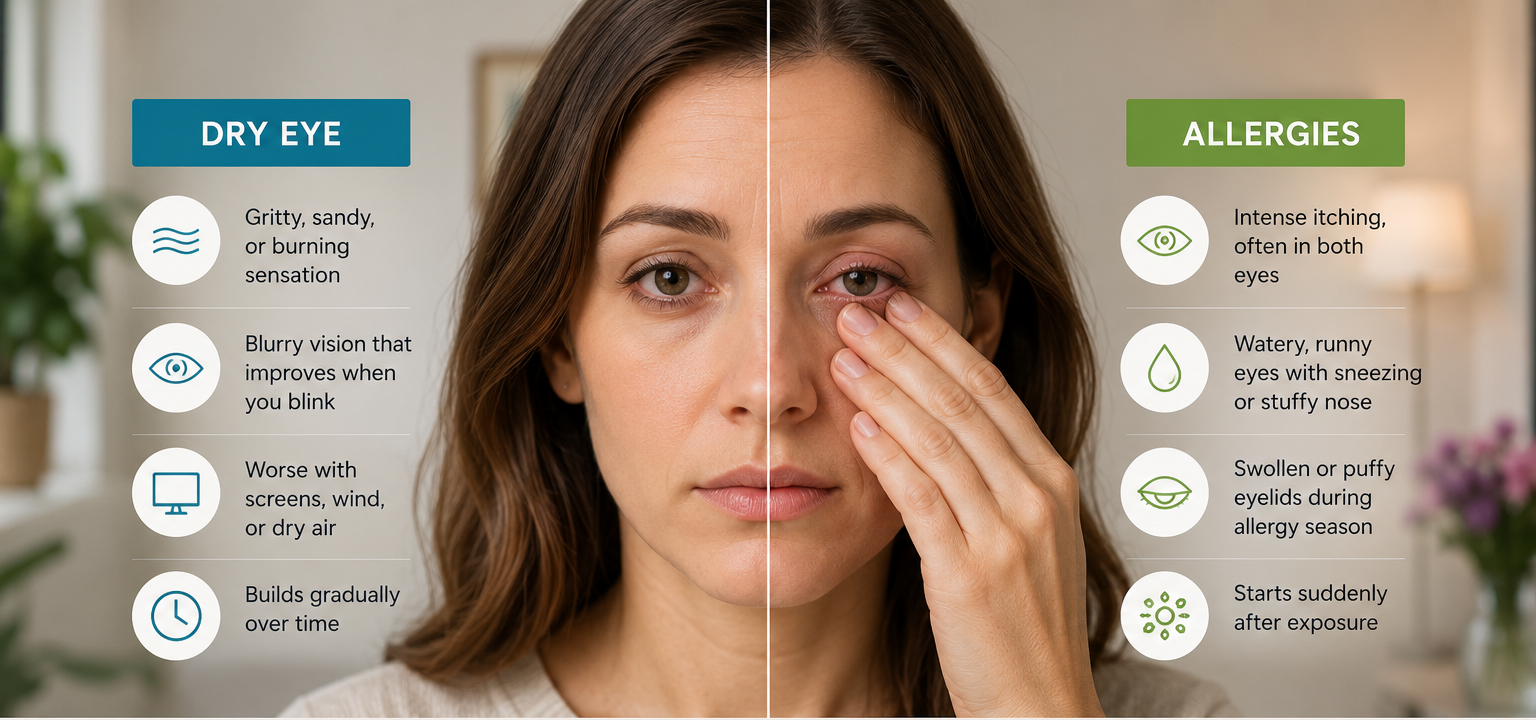
If you remember one rule, make it this one. Pain, a change in vision, or a visible injury means do not wait it out. If you are not sure whether your symptoms point to dry eye or something else, learning about dry eye symptoms can help you tell the difference.
What Home Remedies Really Do to Eyes
Almost everyone tries the same four things first, and three of them make the situation worse.
Rinsing with tap water is the universal first reflex. It genuinely helps after a chemical splash, though usually not for long enough. It does nothing for a scratched cornea, an embedded particle, or an infection.
Redness relief drops are the real trap. They work by narrowing the blood vessels, so the eye looks calmer while the actual problem carries on untouched. Use them for several days and the redness comes back harder than before. People lose a week in that loop.
Searching your symptoms online tends to produce the worst outcome of all, because the same three words return both pink eye and retinal detachment. You either panic and head to the emergency room unnecessarily, or you dismiss everything and go nowhere.
Then there is simply waiting. Sometimes that works. When it does not, a small problem becomes a large one. The American Academy of Ophthalmology (AAO) advises that an injured eye be examined promptly even when the injury seems minor at first, and that is worth taking seriously, because a scratched cornea that gets infected is a very different problem from a scratched cornea that gets treated.
Why an Optometrist Is Often Enough
Most people default to the emergency room because it is the only urgent option they can name. For eyes, it is frequently the slowest and most expensive route to an answer.
A hospital emergency department is built for trauma and for threats to life. Eye complaints sit low on the triage list, so the wait is long. The physician who eventually sees you is rarely working with a slit lamp, and the visit often ends with a referral to an eye doctor anyway. You paid for the wait and left with a phone number.
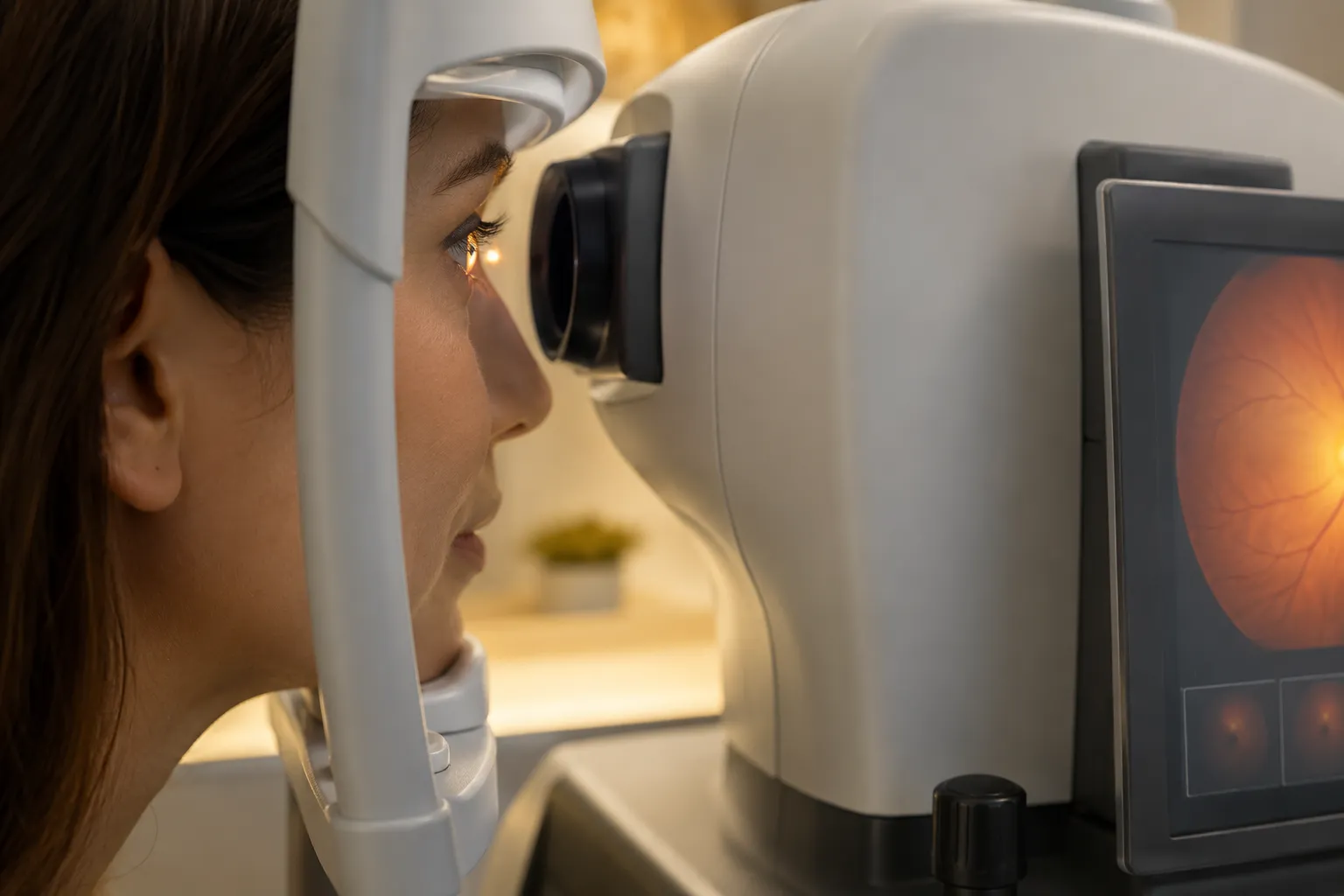
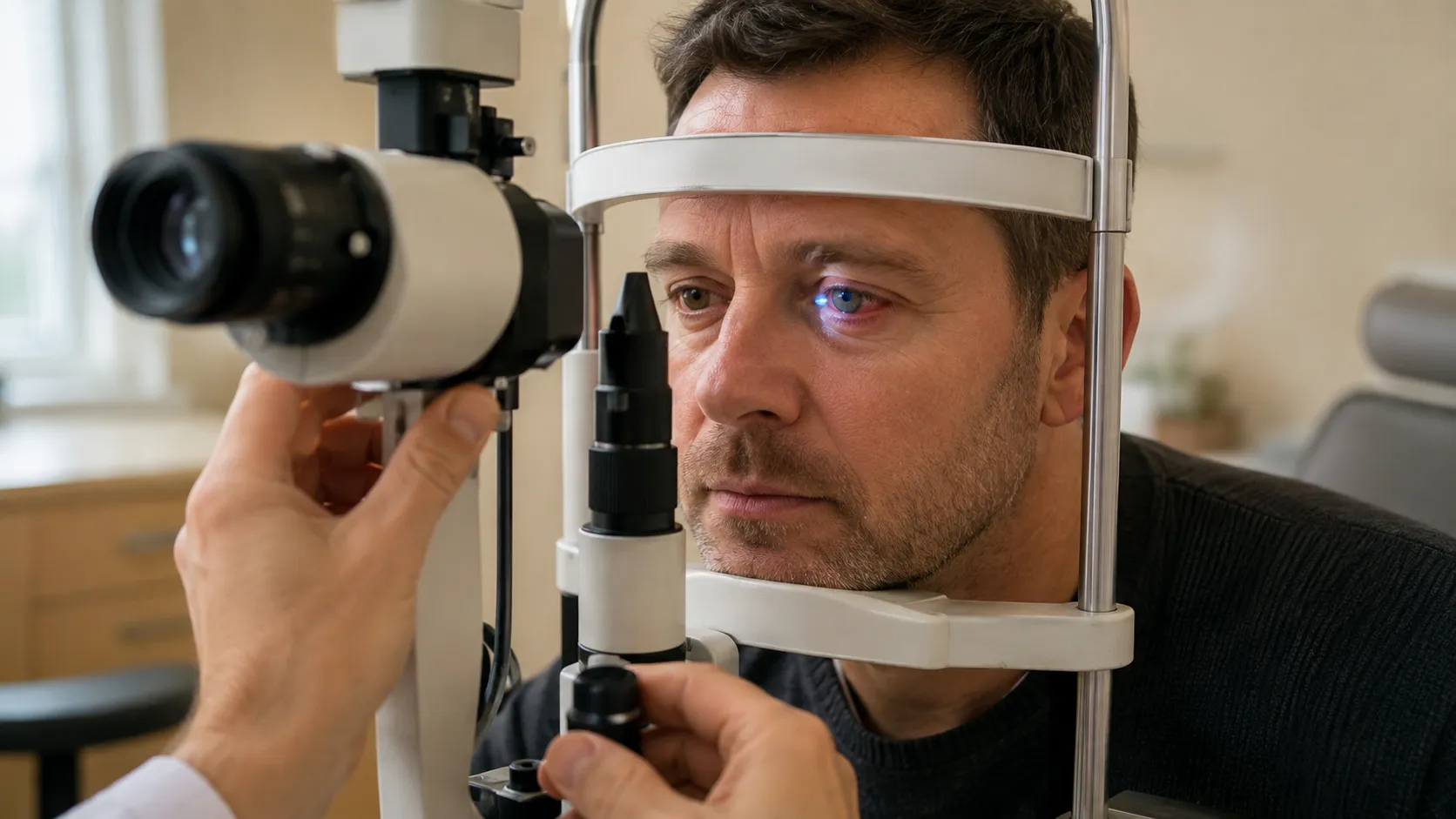
An optometry office has the equipment sitting in the room already. A slit lamp shows the surface of the cornea in fine detail. Tonometry checks the pressure inside the eye. Retinal imaging looks at the back. A foreign body, an abrasion, an infection, or an inflammatory reaction can usually be identified in one visit.
At Fox Run Eye Care in Greenland, NH, near Portsmouth, in office urgent visits cover minor eye injuries, sudden irritation, red eye, allergy related discomfort, and the irritation that follows wearing contact lenses too long. Dr. Amy Catalano Boyer and Dr. Susan Gallant-Behan both see urgent cases during office hours, and when something falls outside that scope, patients are referred straight to a specialist rather than sent home to figure it out.
That boundary matters. Knowing what an office can and cannot handle is exactly what saves you a wasted afternoon.
Getting Seen Quickly Without a Long Wait
The practice sits on Route 33, roughly five minutes from Exit 3 off I-95, which puts it within a short drive of Portsmouth, Newington, Rye, Stratham, Exeter, North Hampton, and Dover, along with Kittery and York across the Maine line. Walk in appointments are accepted when the schedule allows, though calling first is always faster.
Patients from Hampton Falls, Newmarket, and Kittery regularly drive past closer options to come here, which tells you something the website cannot. When Dr. Amy Catalano Boyer moved the practice out of Fox Run Mall in Newington, patients followed. Dr. Susan Gallant-Behan, working together with her, sees many of those same families today.
The words patients use most often are “professional yet comfortable” and “always more thorough than anywhere else I’ve been.” For a routine visit, thoroughness is a nice quality. For an urgent one, it is the entire point. The difference between a quick glance and a proper look is the difference between guessing and knowing.
If the symptom turns out to be part of a longer pattern rather than a one off event, the next step is usually a full evaluation of your eye health, which looks at the whole picture instead of the single complaint that brought you in.
Questions Patients Ask Us Most Often
Can I just wait and see if it clears?
For mild redness or itching that responds to lubricating drops, yes, giving it a day or two is reasonable. For anything involving pain, a change in vision, or an injury, no. Those are the situations where waiting is what turns a small problem into a permanent one. If you find yourself checking the mirror every hour to see whether it is getting worse, that is your answer.
Will I be sent somewhere else anyway?
Sometimes, and that is not a failure. Certain conditions need a surgeon or a retinal specialist. The difference is that you leave knowing exactly what you have and exactly where to go next, usually within the hour, instead of spending an afternoon finding out you need to make another appointment.
Do I need to be an existing patient?
No. Urgent visits are open to anyone, whether you have been coming here for twenty years or have never walked through the door. Bring your photo ID, your insurance card, and your glasses or contact lenses so the eye can be assessed against what you have actually been wearing.
Do Not Wait Out an Eye Problem
The question of when is an eye problem an emergency has a fairly simple answer once you stop trying to judge it by how much it hurts. Chemical splashes, penetrating injuries, sudden vision loss, and severe pain with nausea belong in a hospital immediately. A red painful eye, a gritty sensation that will not clear, sudden light sensitivity, a sudden burst of new floaters and flashes, or sudden double vision belong in an eye doctor’s chair today.
What most people are really looking for is not a diagnosis. It is the end of not knowing. That uncertainty is what keeps someone awake at two in the morning refreshing search results, and it is the part that gets resolved fastest by simply having someone look.
You are not overreacting by getting an eye checked, and you are not being tough by ignoring it. If something feels wrong and it has not settled, book your appointment and find out what you are actually dealing with.
About Dr. Amy Catalano Boyer
Dr. Amy Catalano Boyer is an optometrist and the founder of the practice, where she has cared for patients across the New Hampshire Seacoast for more than 25 years. She earned her Doctor of Optometry degree from Indiana University Bloomington and spent 24 years serving patients at Fox Run Mall in Newington before opening the current office in Greenland. A lifelong New Hampshire resident, she focuses on independent, personalized care supported by advanced diagnostic technology, and on making sure patients understand what is happening with their eyes rather than simply being told what to do about it.