
Why Blurry Vision Often Goes Unnoticed
Your child has been back in the classroom for a few weeks now, and if the board looks blurry, chances are they have not mentioned it. A vision checkup often turns up something nobody suspected, because children assume everyone sees the way they do. Astigmatism is one of the most common findings, and the signs of astigmatism are easy to mistake for tiredness or trouble concentrating. Adults miss it too, sometimes for decades.
Kids Rarely Say They Cannot See Well
A child has nothing to compare their vision to. If letters on the board have always looked soft at the edges, that is simply what seeing looks like to them. They are far more likely to lose interest in reading, or to sit closer to the screen, than to tell you something is wrong.
The American Academy of Ophthalmology (AAO) makes the same point: children with astigmatism are usually unaware of it and unlikely to complain about blurred or distorted vision, while adults with a significant amount often sense that something is off. That gap is exactly why so much of it is picked up at an exam rather than at home.
Signs of Astigmatism Parents Can Spot
No single sign confirms anything on its own, but a pattern is worth looking into:
-Squinting to bring things into focus
-Tilting or turning the head to look at something
-Holding a book or tablet very close
-Headaches toward the end of the school day
-Rubbing the eyes during homework
-Losing their place while reading
-Avoiding reading, or resisting homework that involves it
It is common for a child’s first prescription to come as a surprise, because nothing looked wrong at home.
The Same Signs Show Up in Adults Too
Plenty of adults go decades without knowing. The clues shift a little with age: headlights that streak or halo on the drive home, eyes that feel tired by late afternoon, squinting at road signs, or a dull headache after a long stretch at the screen. Most people file all of that under being busy and getting older.
If it has been years since your last exam, the appointment you book for your child is a reasonable time to have your own eyes checked as well.
What the CYL Number on Your Prescription Means
On your glasses prescription, astigmatism appears as a CYL value, short for cylinder, alongside an axis number that describes its direction. If there is a number in that column, astigmatism has already been measured.
We also fit toric contact lenses for patients with astigmatism, so contacts remain an option even when your prescription includes a cylinder correction.
Lenses are then made with that correction built in, which is why the measurements taken at the fitting matter as much as the prescription itself. For children, glasses are usually the simplest first step, and the same lenses are made for adults whose prescription includes a cylinder correction. Our opticians handle the measuring, fitting, and later adjustments in-house.
A School Screening Is Not an Eye Exam
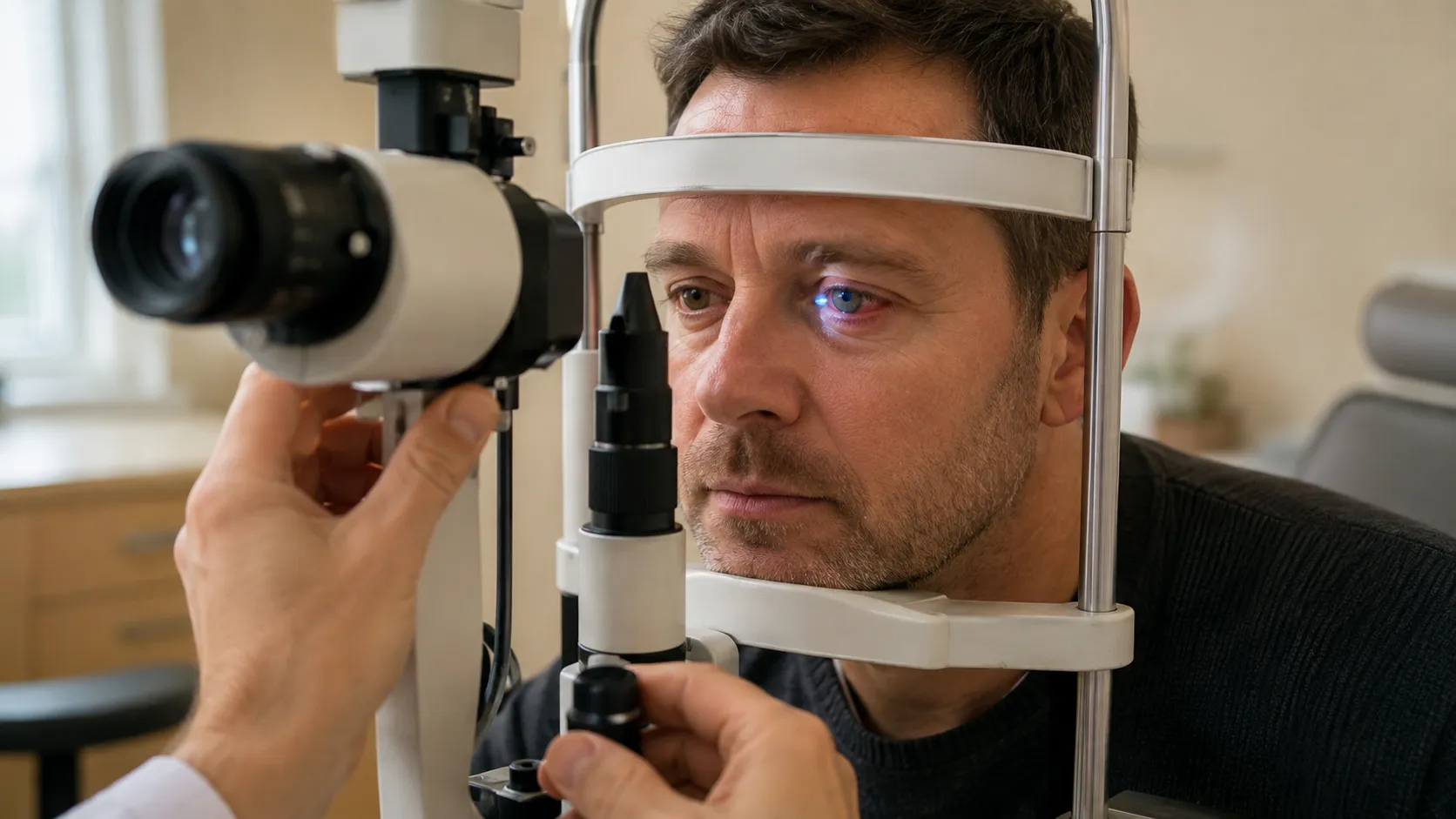
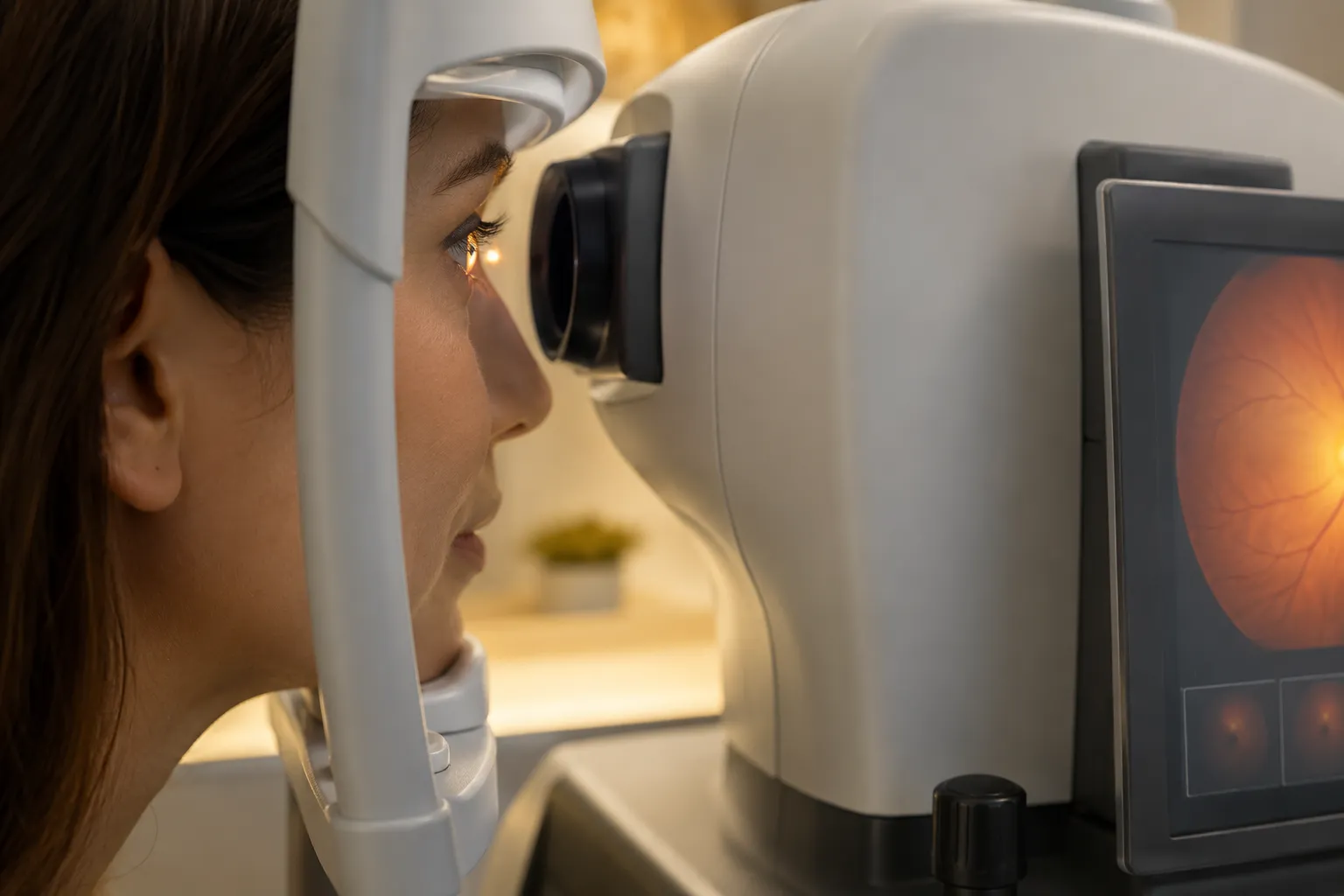
A school vision screening checks a narrow set of things, most often how well a child reads a chart from a distance. A child can pass one and still have enough astigmatism to make close work uncomfortable. A full exam measures how each eye focuses, checks how the eyes work together, and looks at eye health, which a screening is not designed to do.
When Astigmatism Comes With Myopia
Astigmatism often turns up alongside nearsightedness, and September is Myopia Action Month, so it is a fitting time to look at both. Nearsightedness tends to appear and shift during the school years, which is why a prescription that was fine last spring may not be this fall.
For children whose nearsightedness is progressing, we fit Essilor Stellest lenses and CooperVision MiSight 1 Day contact lenses, which are FDA approved for children who are 8 to 12 years old when treatment begins. Which approach suits a particular child, and whether either is appropriate at all, is worked out at the exam rather than in advance. Our guide to myopia options goes through what each one involves.
One Visit for the Whole Family
Families come to our Greenland office from Portsmouth, Newington, Stratham, Rye, North Hampton, Dover, and Exeter, and appointments for a parent and a child are often booked back to back. If glasses are needed, frames and lenses are handled in the same building, so there is no second trip to arrange.
Questions We Hear From Parents
Can Astigmatism Start Later in Life?
It can change over time. Many people have some degree of it from early childhood, and the amount can shift as the eye grows or after an eye injury or surgery. That is part of why eye exams are repeated over time rather than done once.
Will Glasses Make My Child Depend on Them?
Wearing the right prescription does not weaken the eyes. What changes is the comparison: your child sees clearly with the glasses on and notices the blur without them, which can feel like dependence but is simply the difference becoming obvious.
Does My Child Need to Wear Them All Day?
That depends on how much correction is needed, and your eye doctor will tell you what makes sense. Some children only need glasses for schoolwork and screens, while others are more comfortable wearing them throughout the day.
Clear Vision Is Worth Checking
A child who cannot see the board clearly will not usually say so, and an adult who has adjusted to a little blur rarely thinks to mention it either. That is what makes the signs of astigmatism so easy to live with for years: nothing hurts, and nothing looks obviously wrong from the outside.
The start of a school year is as good a reason as any to have it checked, for your child and for yourself. If anything on this list sounds familiar, book your appointment with Dr. Amy Catalano Boyer or Dr. Susan Gallant-Behan, and we will take it from there.
About Dr. Amy Catalano Boyer
Dr. Amy Catalano Boyer is the founder and owner of Fox Run Eye Care, an independent optometry and optical practice located near Portsmouth, Greenland, NH. With over 25 years of experience in optometry, she earned her Doctor of Optometry degree from Indiana University Bloomington and spent more than two decades serving Seacoast patients before opening her own dedicated practice. Dr. Amy Catalano Boyer is known for her thorough, personalized approach to eye care and her commitment to building lasting relationships with patients of all ages. Her practice brings together comprehensive optometry and certified optical services under one roof, giving patients a complete, coordinated care experience from exam to eyewear.