What Are the Benefits of MacuHealth Supplements?

How can MacuHealth support your macula and make everyday vision more comfortable?
MacuHealth supplements deliver focused carotenoids to the macula to help make daily vision more comfortable. They’re a practical option for people who want to protect central vision, reduce symptoms from long screen use, and sharpen contrast perception. Below we explain the key ingredients, how they work, and simple ways to add MacuHealth to a sensible eye‑care routine.
How do the key ingredients in MacuHealth support macular health?
MacuHealth supplies lutein, zeaxanthin, and meso‑zeaxanthin — three carotenoids that collect in the macula. Together they act as a natural blue‑light filter and antioxidant layer, helping preserve macular pigment density and protecting the retina from light‑related and oxidative stress.
What roles do lutein, zeaxanthin, and meso‑zeaxanthin play in vision?
Each carotenoid helps vision in a distinct way. Lutein absorbs high‑energy blue light. Zeaxanthin provides antioxidant support that limits cellular damage. Meso‑zeaxanthin concentrates at the macula’s center to support sharpness and contrast. Working together, they help maintain visual performance and reduce discomfort in bright or demanding visual settings.
How do these carotenoids filter blue light and provide antioxidant protection?
These pigments absorb part of the blue spectrum before it reaches sensitive retinal tissue, reducing photochemical stress from prolonged screen use or bright lights. They also act as antioxidants, neutralizing free radicals and helping preserve healthy retinal cells. Regular MacuHealth intake supports these natural defenses.
What visual comfort benefits can you expect from MacuHealth?
Many patients use MacuHealth to ease eye strain from long screen sessions, reduce glare sensitivity, and improve contrast perception — small improvements that make everyday tasks like reading, driving at dusk, and working on screens easier on the eyes.
How does MacuHealth improve contrast sensitivity and reduce glare?
By increasing macular pigment density, these carotenoids sharpen the transition between light and dark, which enhances contrast sensitivity — especially in low light. A denser macular pigment can also reduce the impact of glare so bright lights feel less overwhelming and finer details remain clearer.
Clinical studies report measurable improvements in visual function with carotenoid supplementation, particularly under challenging lighting.
Carotenoid Supplementation Improves Mesopic Contrast Sensitivity
At 18 months the treatment group showed a statistically significant increase in mesopic contrast sensitivity under glare conditions; the placebo group did not show this change.
Macular pigment response to lutein, zeaxanthin, and meso‑zeaxanthin supplementation in open-angle glaucoma: a randomized controlled trial, J Loughman, 2021
Clinical research supports carotenoid supplementation for measurable gains in visual function.
Carotenoid Supplementation Boosts Contrast Sensitivity
A randomized trial reported that increasing macular pigment through supplementation improved contrast sensitivity in people without retinal disease.
Enrichment of macular pigment enhances contrast sensitivity in subjects free of retinal disease: Central Retinal Enrichment Supplementation Trials–Report 1, JM Nolan, 2016
Additional studies reinforce the positive effects of these carotenoids on macular health and contrast sensitivity.
Lutein, Zeaxanthin, Meso‑Zeaxanthin for Macular & Contrast Sensitivity
This study tracked changes in macular sensitivity (MS) and contrast sensitivity (CS) over six months using lutein 10 mg, meso‑zeaxanthin 10 mg, and zeaxanthin 2 mg.
The effects of supplementation with lutein, zeaxanthin, and meso‑zeaxanthin in macular sensitivity and contrast sensitivity in patients with high myopia., AAP Martinez, 2025
In what ways does MacuHealth enhance visual sharpness and ease digital eye strain?
Long periods of screen use can cause blurred vision, tired eyes, and difficulty refocusing. The carotenoids in MacuHealth support retinal health and visual processing in ways that may help preserve clarity and reduce fatigue during extended viewing sessions.
Research on related carotenoids also supports their role in relieving digital eye strain symptoms.
Astaxanthin Reduces Digital Eye Strain Symptoms
In an 84‑day randomized trial, astaxanthin supplementation produced significant improvements in CVS‑Q scores compared with placebo — roughly a 20% between‑group difference.
Astaxanthin (AstaReal®)
Improved Acute and Chronic Digital Eye Strain in Children: A Randomized Double-Blind Placebo-Controlled Trial, M Marwah, 2025
How do different MacuHealth variants address specific eye wellness needs?
MacuHealth offers formulations aimed at common eye concerns, so you can choose a product that matches your goals — whether that’s broad macular support, extra metabolic and retinal care, or ingredients targeting vitreous health and floaters.
What are the benefits of MacuHealth DM for retinal and metabolic support?
MacuHealth DM combines the core carotenoids with nutrients that support retinal function and metabolic balance. It’s intended to support retinal cells and healthy circulation — useful for people managing metabolic risk factors alongside macular health.
How do VitreousHealth and Vision Edge PRO support floaters and visual performance?
VitreousHealth and Vision Edge PRO include ingredients focused on the vitreous and overall visual function. These formulas aim to support the gel‑like vitreous and help maintain clarity and comfort for people experiencing floaters or seeking improved visual performance.
What is a carotenoid wellness reading and how does it personalize eye health?
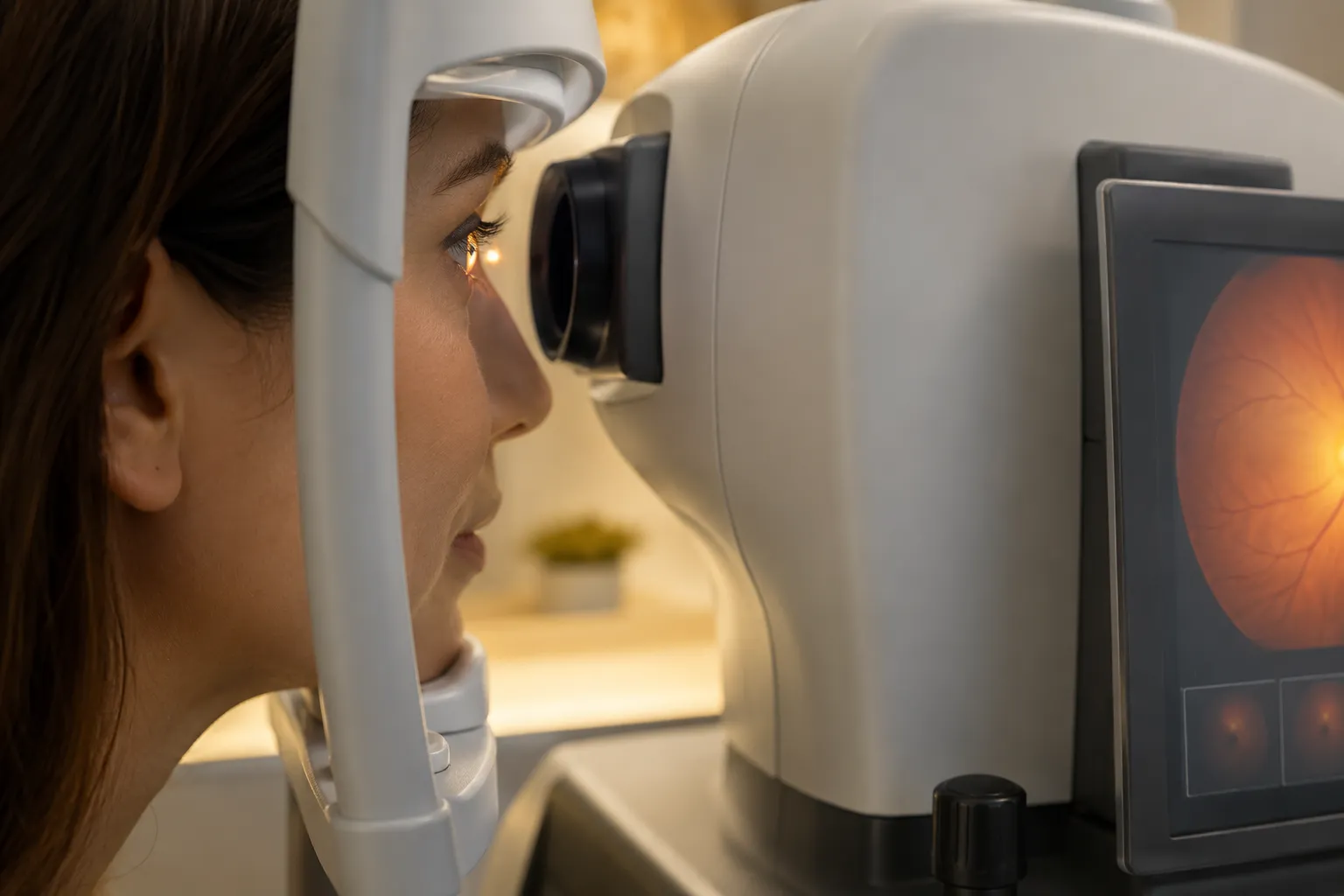
A carotenoid wellness reading is a quick, non‑invasive skin test that estimates carotenoid levels. It gives an easy snapshot of nutritional status related to eye health and helps us tailor recommendations for diet and supplements.
How is the non-invasive carotenoid reading conducted at Fox Run Eye Care?
At Fox Run Eye Care we use a simple skin‑measurement device to estimate carotenoid levels. The test is painless and fast, and it helps us recommend targeted foods and supplements that can raise your macular pigment.
How can tracking carotenoid levels guide nutritional and lifestyle choices?
Knowing your carotenoid score helps you and your clinician decide whether to increase certain foods or begin supplementation. Repeating the test over time shows whether dietary changes and supplements are raising your macular pigment and improving visual comfort.
How can MacuHealth supplements fit into a healthy eye‑care routine?
MacuHealth works best as one part of a broader plan: a balanced diet and healthy habits combined with consistent supplementation give your eyes the best chance to stay comfortable and functional day to day. For comprehensive information on eye health and care, you can also consult resources like the American Academy of Ophthalmology.
What dietary and lifestyle practices complement MacuHealth supplementation?

Combine supplementation with a diet high in leafy greens and orange/yellow vegetables — foods like spinach, kale, and carrots provide carotenoids naturally. Regular exercise, hydration, good sleep, and scheduled breaks from screens also help your eyes get the most benefit from MacuHealth.
When should individuals consider adding MacuHealth to their eye care routine?
Consider MacuHealth if you experience digital eye strain, difficulty with contrast, or if you want proactive macular support — especially as you get older. Talk with your eye care professional about timing and the formulation that best fits your needs.
| Ingredient | Role | Benefit |
|---|---|---|
| Lutein | Absorbs high‑energy blue light | Supports retinal health |
| Zeaxanthin | Provides antioxidant protection | Helps protect retinal cells from oxidative stress |
| Meso-Zeaxanthin | Concentrates at the macular center | Supports sharpness and contrast |
The table summarizes how each carotenoid contributes to macular health. Understanding these roles can help you and your clinician choose the right support for your vision goals.
MacuHealth offers a nutrition‑based approach to protect the macula and improve everyday visual comfort. Paired with healthy habits and regular eye care, these supplements can help you keep your vision clearer and more comfortable over time.
Frequently Asked Questions
What are the differences between the various MacuHealth formulations?
MacuHealth comes in several formulations tailored to different eye health needs. For example, MacuHealth DM adds nutrients for retinal and metabolic support, VitreousHealth focuses on the vitreous and floaters, and Vision Edge PRO is designed to support overall visual performance. Each combines the core carotenoids with other ingredients to address specific concerns so you can pick the best fit for your goals.
How can I determine if I need MacuHealth supplements?
If you notice digital eye strain, trouble with contrast, or are worried about age‑related changes, MacuHealth may help. People whose diets are low in carotenoid‑rich foods or who spend long hours on screens can also benefit. An eye care professional can assess your needs and advise whether supplementation is right for you.
Are there any specific lifestyle habits that can further support eye health?
Yes. Regular physical activity supports circulation, hydration helps eye moisture, and a diet rich in fruits and vegetables — especially carotenoid sources — supports macular health. Following the 20‑20‑20 rule (look at something 20 feet away for 20 seconds every 20 minutes) can also reduce digital eye strain.
What should I do if I miss a dose of MacuHealth supplements?
If you miss a dose, take it when you remember unless it’s nearly time for the next dose. In that case skip the missed dose and continue your regular schedule. Do not double up to catch up. Establishing a routine helps maintain consistent use.
Can MacuHealth supplements be taken with other vitamins or supplements?
MacuHealth can generally be taken with other vitamins, but check with your healthcare provider to avoid interactions or overlapping ingredients. A clinician can help you build a safe, effective supplement plan that meets your needs without exceeding recommended amounts.
How do I know if MacuHealth is working for me?
Track symptoms and visual comfort to judge effectiveness — many people notice subjective improvements in weeks. For objective measures, consider periodic assessments of macular pigment density or contrast sensitivity through your eye care professional. Keeping a brief journal of changes can help in follow‑up visits.
Is there a specific age group that benefits most from MacuHealth supplements?
People of all ages can benefit, but older adults may see particular advantages because macular pigment density tends to decline with age. Those with early signs of age‑related macular changes or chronic screen use may also find these supplements helpful. Consult your eye care professional for personalized advice.
What is the recommended dosage for MacuHealth supplements?
Dosage varies by formulation and individual needs. Follow the product label or your clinician’s guidance. Most formulations recommend one to two capsules daily, taken with a meal to aid absorption. Consistent daily use gives the best chance of benefit.
Can MacuHealth supplements interact with medications?
MacuHealth is generally well tolerated, but carotenoid supplements can interact with some medications — particularly those affecting blood clotting or cholesterol. Check with your healthcare provider before starting any new supplement, especially if you take prescription medicines or have chronic conditions. Your provider can review potential interactions and safety.
Are MacuHealth supplements suitable for vegetarians or vegans?
Many MacuHealth products use carotenoids from natural sources and are suitable for vegetarians, but some formulations may include non‑vegan components like gelatin capsules. Check the product label or contact the manufacturer if you follow a strict vegan diet.
How should MacuHealth supplements be stored?
Store MacuHealth in a cool, dry place away from direct sunlight and humidity — a cabinet or pantry works well. Keep the lid tightly closed between uses and check the expiration date before taking. Proper storage helps preserve potency.
What lifestyle changes can enhance the effectiveness of MacuHealth supplements?
To maximize benefits, eat a diet rich in fruits and vegetables (especially leafy greens and orange/yellow produce), stay active, hydrate, and get regular sleep. Take breaks from screens and practice good visual hygiene to further support eye comfort and retinal health.
Is there a specific time of day that is best to take MacuHealth supplements?
There’s no single best time, but take MacuHealth with a meal because carotenoids are fat‑soluble and absorb better with food. Pick a time you can take them consistently each day — morning or evening — to build a routine.
What are the potential side effects of taking MacuHealth supplements?
Most people tolerate MacuHealth well. Some may experience mild digestive upset or, rarely, allergic reactions. If you have health conditions or take medications, consult your healthcare provider before starting and monitor how you feel after beginning use.
Can children take MacuHealth supplements for eye health?
MacuHealth products are primarily developed for adults and pediatric use has not been widely studied. If you’re considering supplementation for a child, consult a pediatrician or eye care professional for an age‑appropriate recommendation.
How long does it take to see results from MacuHealth supplements?
Responses vary by person, diet, and lifestyle. Some people notice subjective improvements within weeks, while measurable changes in macular pigment and contrast sensitivity typically take a few months of consistent use. Combining supplements with a carotenoid‑rich diet usually gives the best results.
Are there any dietary restrictions when taking MacuHealth supplements?
There are no strict dietary limits, but a balanced diet rich in fruits and vegetables enhances the supplement’s effects. Avoid ingredients you’re allergic to and check with your provider if you have special dietary concerns.
How do MacuHealth supplements compare to other eye health supplements?
MacuHealth is known for its specific combination and ratio of lutein, zeaxanthin, and meso‑zeaxanthin targeted to support macular pigment directly. Other supplements may include similar ingredients in different amounts or proportions. Compare labels and consult your eye care professional to choose the best option for your needs.
Can MacuHealth supplements help with age-related vision issues?
Yes — by supporting macular pigment density and retinal health, MacuHealth can be part of a strategy to maintain visual function with age and may help reduce risk factors linked to age‑related macular degeneration. Discuss personalized care and monitoring with your eye care provider.
Conclusion
MacuHealth provides a targeted blend of carotenoids that supports macular health, improves contrast sensitivity, and can reduce discomfort from glare and extended screen use. Used alongside a healthy diet and regular eye care, these supplements are a practical step toward clearer, more comfortable vision. Talk with your Fox Run Eye Care clinician to find the MacuHealth product that fits your goals and start a plan tailored to you.
About the Author
Dr. Amy Catalano Boyer, O.D.
Founder, Fox Run Eye Care, PLLC | Indiana University Bloomington
Dr. Boyer is a licensed optometrist with over 25 years of experience serving New Hampshire’s Seacoast communities. A lifelong New Hampshire resident, she founded Fox Run Eye Care to provide personalized, comprehensive vision care with advanced technology.