Dry Eye or Allergies? Know Which One You Have
Eye Allergies vs. Dry Eye: How to Tell the Difference
Your eyes are red, itchy, and watering, so you reach for allergy drops, but after an hour nothing has really changed. The frustrating truth is that dry eye and seasonal allergies overlap so much that even careful people guess wrong for weeks. The only reliable way to tell the difference between eye allergies and dry eye is to have someone look at your tear film directly, which is why booking a thorough eye evaluation at a trusted vision center near Portsmouth, Greenland, NH gives you the answer the guessing never will. If you live around Greenland, Stratham, or Rye, this guide will help you stop treating the wrong problem.
Why the Two Get Confused So Often
Both conditions inflame the surface of the eye, and both leave you red, irritated, and reaching for drops. That is why so many people across the Seacoast spend an entire season treating the wrong problem. The overlap is real, but the underlying cause is completely different, and that difference decides what actually brings relief.
Allergies are an immune reaction. When pollen, pet dander, or dust hits the eye, your body releases histamine, and that is what drives the intense itch. Dry eye is a tear film problem: either your eyes do not make enough tears, or the tears evaporate too fast, leaving the surface exposed and scratchy. One is your immune system overreacting, the other is a lubrication shortage.
The One Symptom That Gives It Away
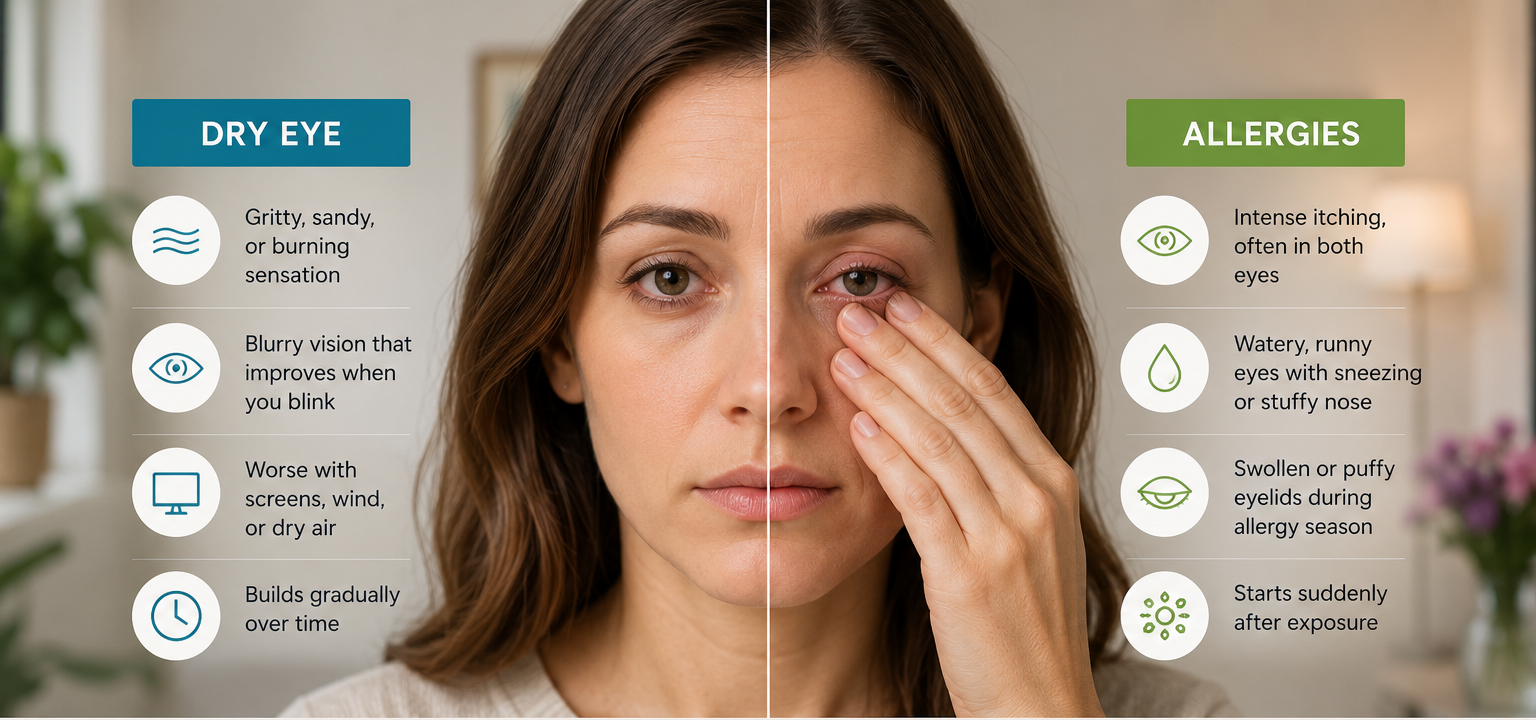
Itch is the tell. If your eyes itch intensely, in a way that makes you want to rub them, allergies are usually the driver. Dry eye feels more like grit, burning, or something stuck in the eye, and it often comes with blurry vision that clears when you blink. Allergy symptoms also tend to arrive suddenly after exposure, while dry eye builds slowly over hours of screen time or in dry indoor air.
How the Symptoms Actually Differ
Allergy eyes usually bring:
- Intense itching, often in both eyes at once
- Watery, runny eyes alongside sneezing or a stuffy nose
- Swollen or puffy eyelids that flare during pollen season
Dry eye usually brings:
- A gritty, sandy, or burning feeling rather than itch
- Blurry vision that improves for a second when you blink
- Symptoms that worsen with screens, wind, or dry heated air
Here is the part that trips people up: you can have both at once. Allergy season can push an already strained tear film over the edge, so the eyes itch and feel dry together. Rubbing itchy eyes also disrupts the tear surface, which makes dryness worse. This is exactly why self-diagnosis so often misses.
Can Eye Allergies Cause Blurry Vision
This is one of the most common worries people bring through our door, and the answer is yes. When allergies inflame the eye surface or trigger excess tearing, your vision can blur and fluctuate, clearing for a moment and then smudging again. Dry eye does the same for a different reason, since an unstable tear film scatters light before it reaches the back of your eye. The blur usually comes and goes rather than staying constant, and it often shows up at the worst moment, behind the wheel at night or partway through a workday.
Why Treating the Wrong One Backfires
Antihistamine drops calm an allergic reaction, but they also reduce tear production, so if your real problem is dry eye, they can leave your eyes feeling worse. The reverse happens too: artificial tears soothe a dry surface but do nothing for the histamine driving an allergy flare. The American Academy of Ophthalmology (AAO) explains that allergic eye disease is common and that accurate diagnosis matters because symptoms can come from allergies, infection, or a combination of overlapping conditions. Treating the wrong cause simply delays the relief you are after.
A few other conditions can also masquerade as allergies, including eyelid inflammation and irritation from contact lenses. That is the case for getting examined rather than cycling through drugstore drops, and ongoing managing dry eye properly is far more effective once the real cause is clear.
How an Exam Settles the Question
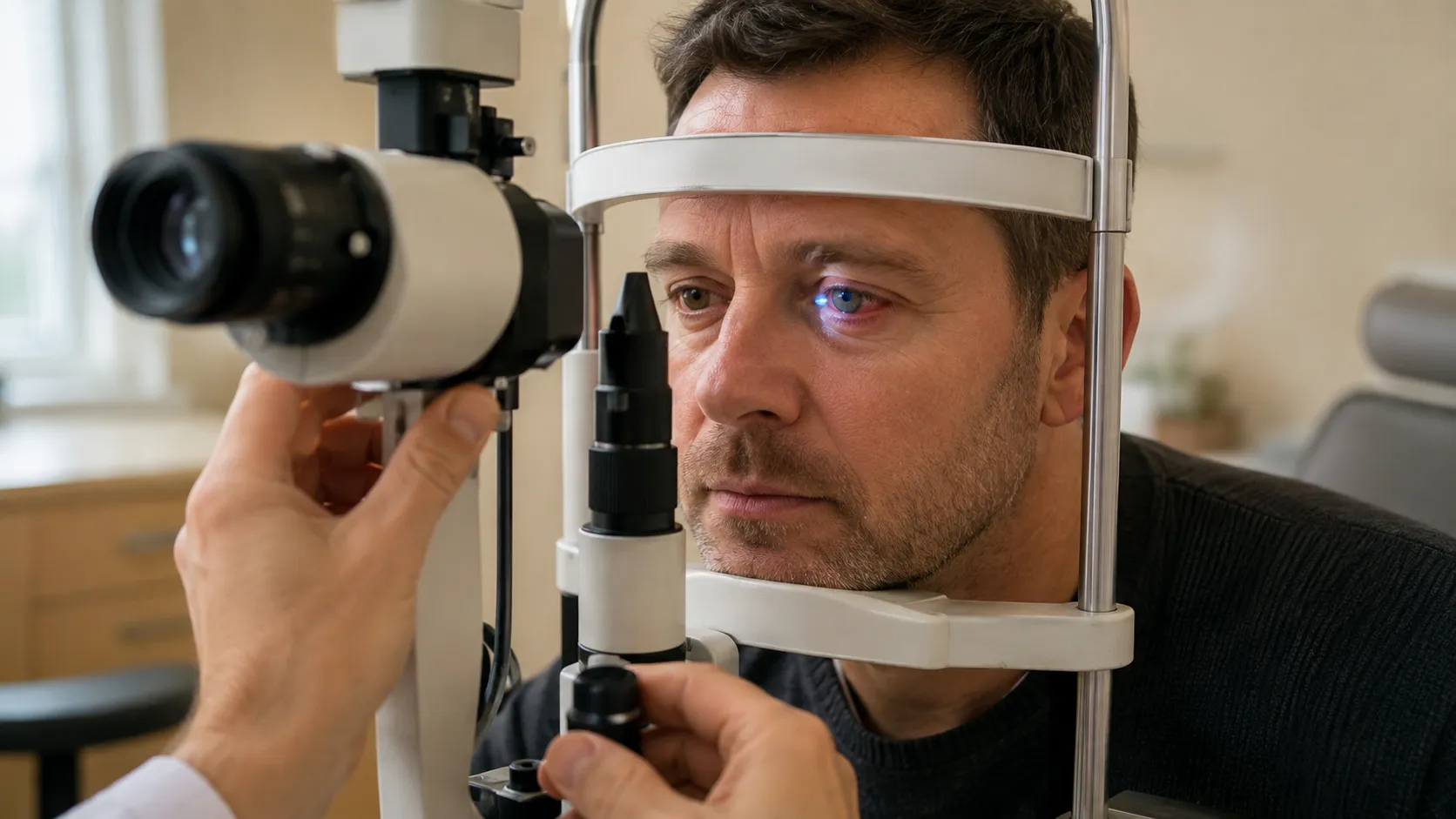
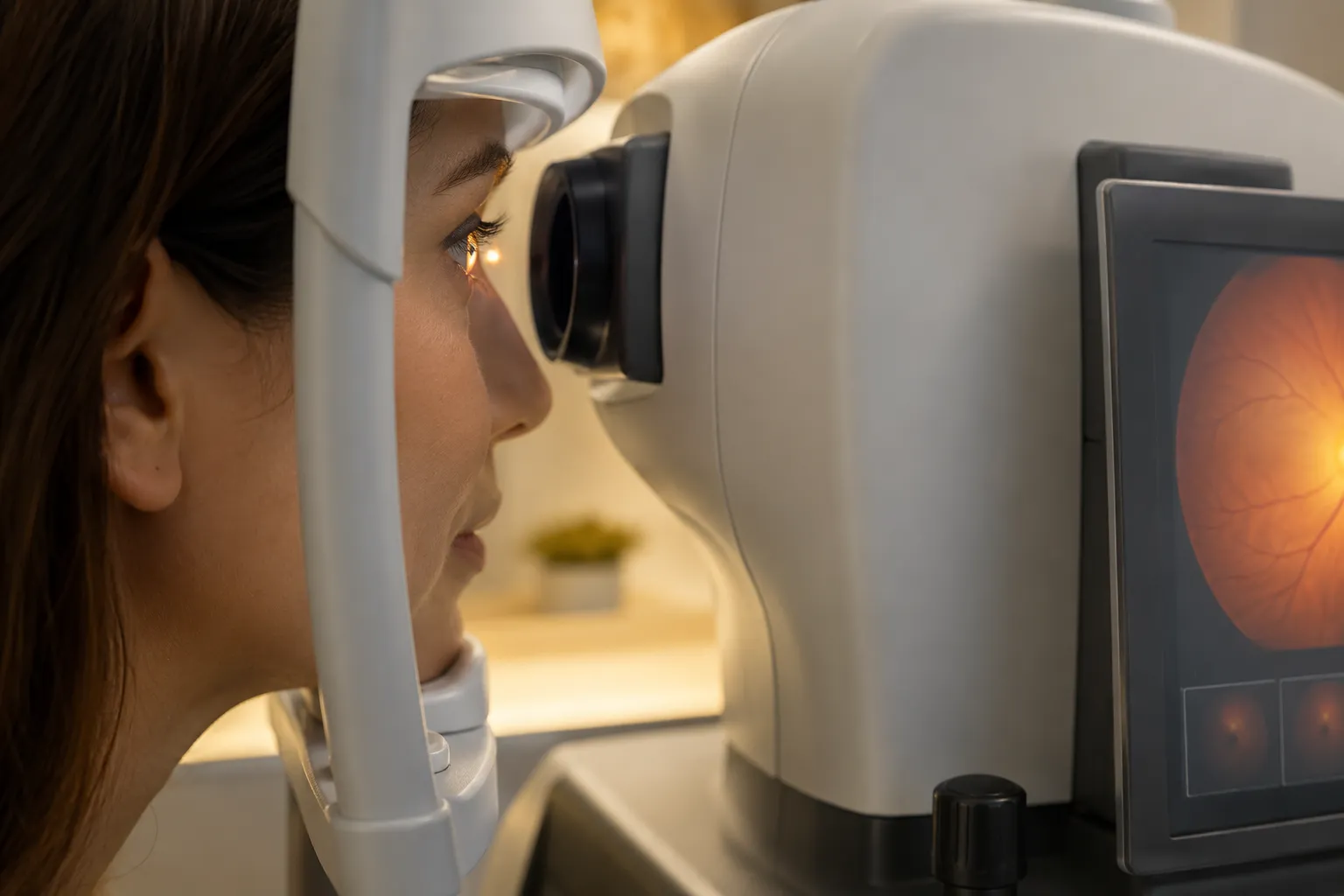
During a visit, your optometrist examines the surface of your eye, checks your tear film, and looks for the telltale signs each condition leaves behind. It is painless, takes about thirty minutes, and replaces weeks of trial and error with a straight answer. Patients regularly arrive convinced they have stubborn allergies, only to learn a long-standing dry eye component has been there all along. Many tell us the relief of simply knowing is almost as good as the treatment itself.
Fox Run Eye Care serves patients across the Seacoast, including Portsmouth, Newington, Exeter, Dover, Hampton, and Rye, so a clear answer is only a short drive away.
Common Questions Before You Book
Can Allergies Cause Dry Eye Symptoms
Yes, and it happens more than people expect. The inflammation from an allergic reaction can disrupt your tear film, and the antihistamines many people take can dry the eyes out further. That is why allergy season often leaves you feeling both itchy and gritty at the same time.
Will Allergy Drops Fix Gritty Eyes
Usually not on their own. Antihistamine drops target the itch, but they can reduce tear production and make dryness worse. If your main symptom is a gritty or burning feeling rather than itch, an exam will point you toward the right treatment.
How Do I Know Which One I Have
The honest answer is that the surest way is to have your eyes looked at. Itch usually points to allergies and grit usually points to dryness, but the two overlap so often that a quick look at your tear film gives you a definite answer instead of a guess.
Stop Guessing and Find Real Relief
Sorting out dry eye vs allergies is not about willpower or trying one more drop from the pharmacy shelf. Knowing how to tell the difference between eye allergies and dry eye is about knowing which problem you actually have, because the right treatment for one does little for the other. Once you have a clear diagnosis, relief tends to come faster and last longer.
If your eyes have been red, itchy, or irritated and nothing seems to help, you do not have to keep guessing. Whether you are coming from Portsmouth, Stratham, or anywhere across the Seacoast, the team at Fox Run Eye Care is ready to tell you exactly what is going on so you can get back to clear, comfortable vision.
About the Author
Dr. Amy Catalano Boyer is the founder of Fox Run Eye Care and has been practicing optometry for over 25 years. She earned her Doctor of Optometry degree from Indiana University Bloomington and is a lifelong New Hampshire resident. She is passionate about personalized, technology-driven care that helps patients of all ages enjoy clear, healthy vision, and she takes the time to make sure every patient leaves understanding exactly what their eyes need.